GPR scanning
Ground penetrating radar
Radar finds what a standard locator cannot: plastic water and storm pipe, concrete, buried tanks, abandoned lines and voids. Non-destructive, with results marked on the ground the same visit.
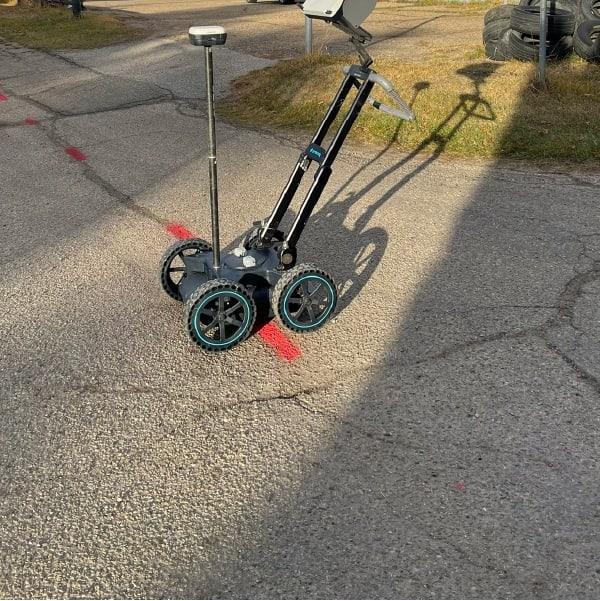
How GPR works
Ground penetrating radar sends high-frequency radio pulses into the ground and records the reflections that come back. Anything that differs from the surrounding soil, such as a pipe, a tank, a void or a slab edge, shows up as a change in the signal.
Electromagnetic locating needs a conductive line to follow. GPR does not, which is why the two are used together: one traces the metallic lines, the other picks up the plastic, concrete and unknowns.
What affects the result
Radar performance depends on the ground. Dry sand and gravel image well. Wet clay and salty or highly conductive soils shorten the depth radar can see. Target size, depth and what the surface is made of all matter too.
We tell you up front what to expect on your site, and the report states what was confirmed, what was indicated and what could not be resolved.
Where it is used
What we use it for
01
Non-conductive lines
Plastic water and storm pipe, concrete and asbestos-cement mains, and fibre in conduit.
02
Underground storage tanks
Buried heating oil and fuel tanks, septic tanks and abandoned infrastructure.
03
Construction and excavation
Unmarked utilities, voids and buried structures found before the excavator arrives.
04
Environmental assessments
Locating tanks and buried objects to support site assessments and remediation planning.
05
Abandoned and unrecorded lines
Old services that appear on no drawing and carry no signal to trace.
06
Archaeological and forensic work
Non-invasive scanning for buried structures and features.
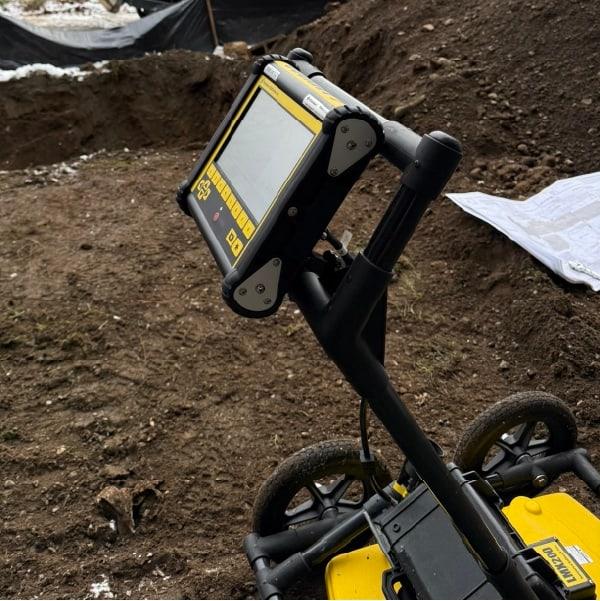
Scanning for storm, sewer and water lines 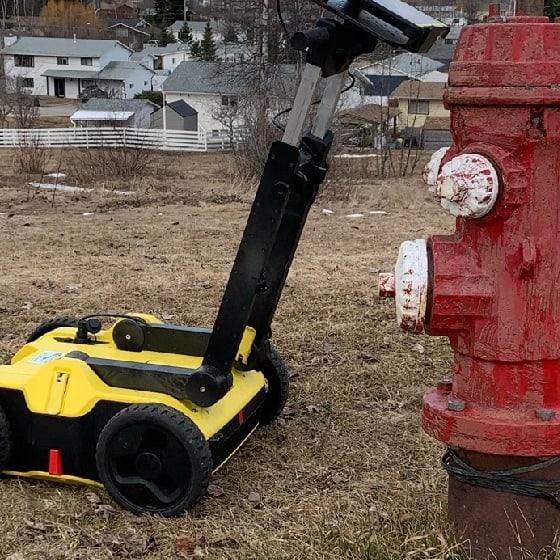
Tracing a water main from the hydrant 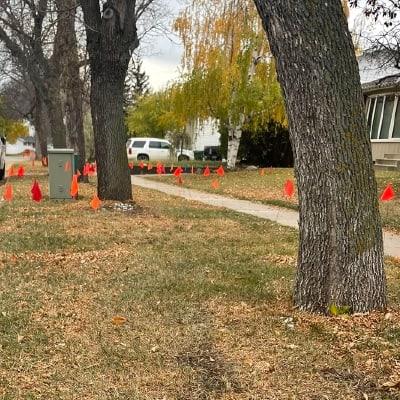
Targets flagged for the crew
What you get
- Targets marked on the ground in paint and flags
- Written report of findings and limitations
- RTK survey of targets on request
- Scan area sketch or site plan
Common questions
Ground penetrating radar: questions
Can GPR find plastic water lines?
Often, yes. Plastic pipe gives no signal for a standard locator, so radar is the main tool for it. Success depends on the pipe size and depth and on soil conditions, and we will tell you plainly what the ground on your site allows.
How deep can ground penetrating radar see?
It depends on the soil and the antenna. In dry, sandy ground radar reaches well past typical utility depths. In wet clay the useful depth can be much shallower. Most buried services sit within the range radar handles well.
Does GPR damage anything?
No. It is non-destructive and non-invasive. The cart is rolled across the surface and nothing is dug or drilled.
Do I still need a regular locate if I book GPR?
Usually both are done together. Electromagnetic locating is faster and more definitive on metallic lines, and radar covers what it cannot. Using both gives the most complete picture.
Request a locating estimate
Let’s dig
safe together
Send the site and what you are planning. We reply to requests the same day.