Oil tanks and USTs
Underground tank locating
Many older properties still have a heating oil or service tank in the ground that appears on no record. We scan the property, outline what is there and document it, so the next step can be planned properly.
Why buried tanks matter
Homes built before natural gas arrived were commonly heated with oil stored in a buried steel tank. When the furnace was converted, the tank was often left where it was. Decades later it can leak, and it can stall a sale, a mortgage or an insurance policy.
Commercial and industrial sites have the same issue with old fuel and service tanks. Finding them before excavation or redevelopment avoids an expensive surprise.
How we find them
We start with the clues: fill and vent pipes, cut-off lines at the foundation, patched concrete, the age and history of the building. Then we scan the likely areas with ground penetrating radar and a metal detector.
If a tank is there, we mark its outline on the ground and record its position. If the scan is clear, you get that in writing.
Where it is used
What we use it for
01
Buying or selling a home
A tank scan as part of due diligence, before conditions come off.
02
Renovation and demolition
Confirming what is under the yard or slab before the excavator arrives.
03
Tank removal
Giving the removal contractor an exact outline to dig to.
04
Environmental site assessments
Locating tanks and associated piping for consultants and engineers.
05
Commercial properties
Old service stations, shops and yards with undocumented fuel storage.
06
Insurance and lending
Documentation that a property has been scanned.
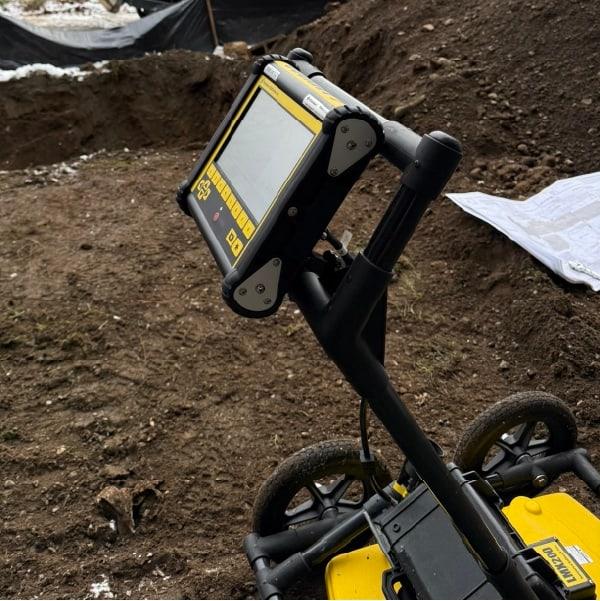
Radar scan before excavation 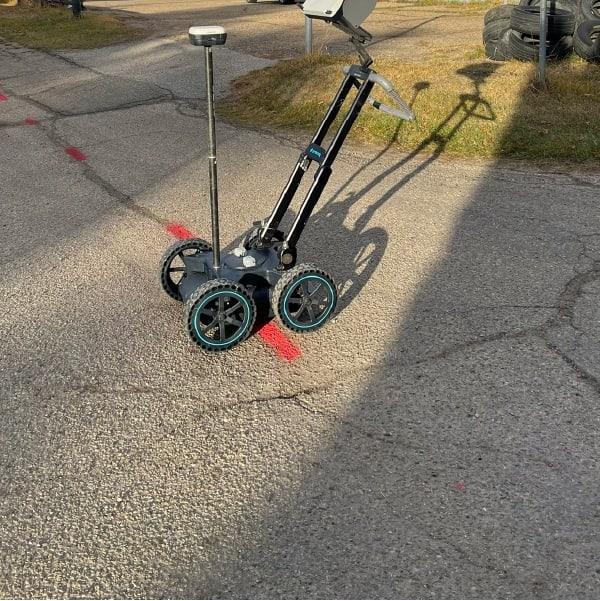
GPR with survey-grade positioning 
Target laid out on the ground
What you get
- Tank outline marked on the ground
- Written report stating what was found, or that the scan was clear
- Photos and a site sketch
- RTK survey of the tank position on request
Common questions
Underground tank locating: questions
How do I know if my property has a buried oil tank?
Signs include a fill or vent pipe near the foundation, cut-off copper lines in the basement, and a house built before gas service reached the area. Many tanks leave no visible sign at all, which is why a scan is the reliable way to know.
Can you tell me if the tank has leaked?
No. Locating finds and outlines the tank. Whether it has leaked is determined by soil sampling, which an environmental consultant or tank removal contractor carries out.
Do you remove tanks?
We locate and document them. Removal is done by a tank removal contractor, and our markings and report give them exactly what they need to start.
How long does a tank scan take?
A typical residential property takes about an hour on site, depending on the size of the yard and how much of it is accessible.
Request a locating estimate
Let’s dig
safe together
Send the site and what you are planning. We reply to requests the same day.