Ground penetrating radar is the tool for buried things that give no signal to follow: plastic pipe, concrete, tanks, old foundations. It is also widely misunderstood. It does not produce an X-ray picture of the ground, and it does not work equally well everywhere. This is a practical guide to what GPR scanning does, how to read what it shows and where its limits are.
How GPR works
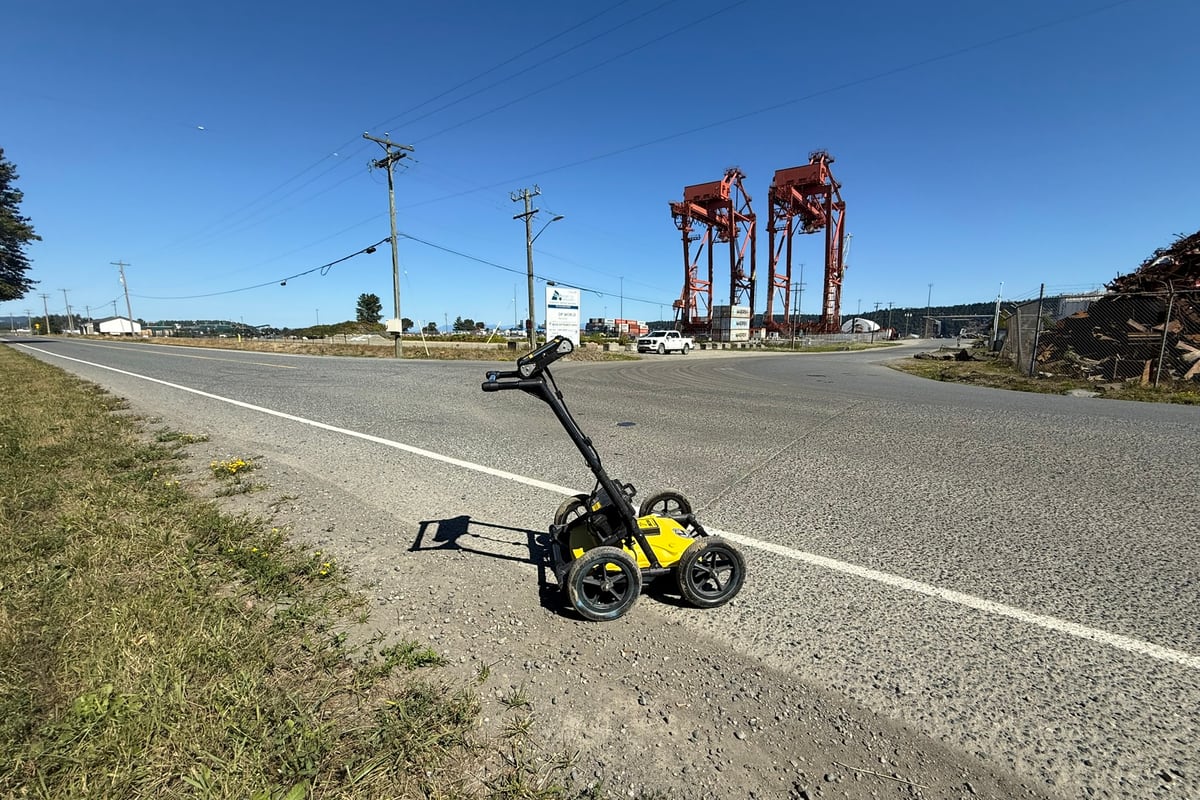
A GPR cart carries an antenna that sends short pulses of radio energy into the ground and listens for what comes back. Wherever the ground changes, for example from soil to a pipe or from gravel to a concrete slab, some of that energy reflects. The unit records how long each reflection took to return and draws the result as the cart rolls forward.
Because it responds to a change in material and not to metal, radar picks up targets that an electromagnetic locator cannot.
How to read the screen
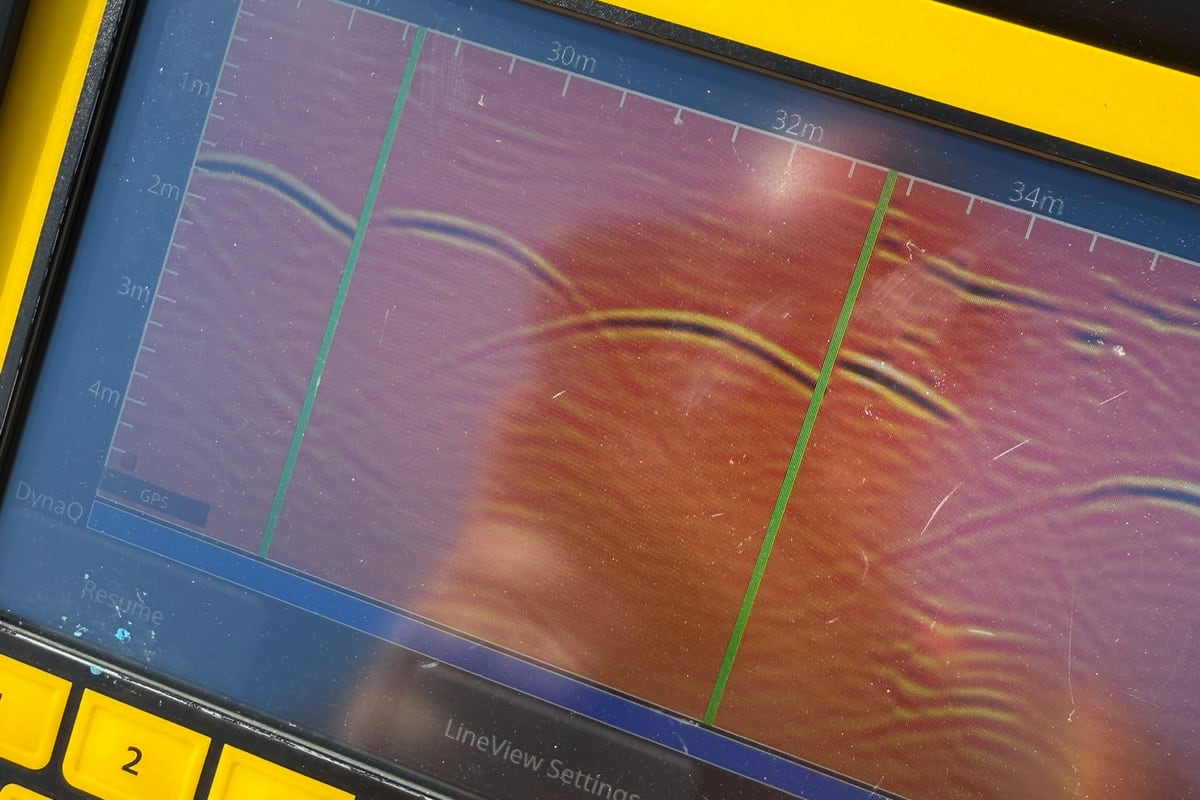
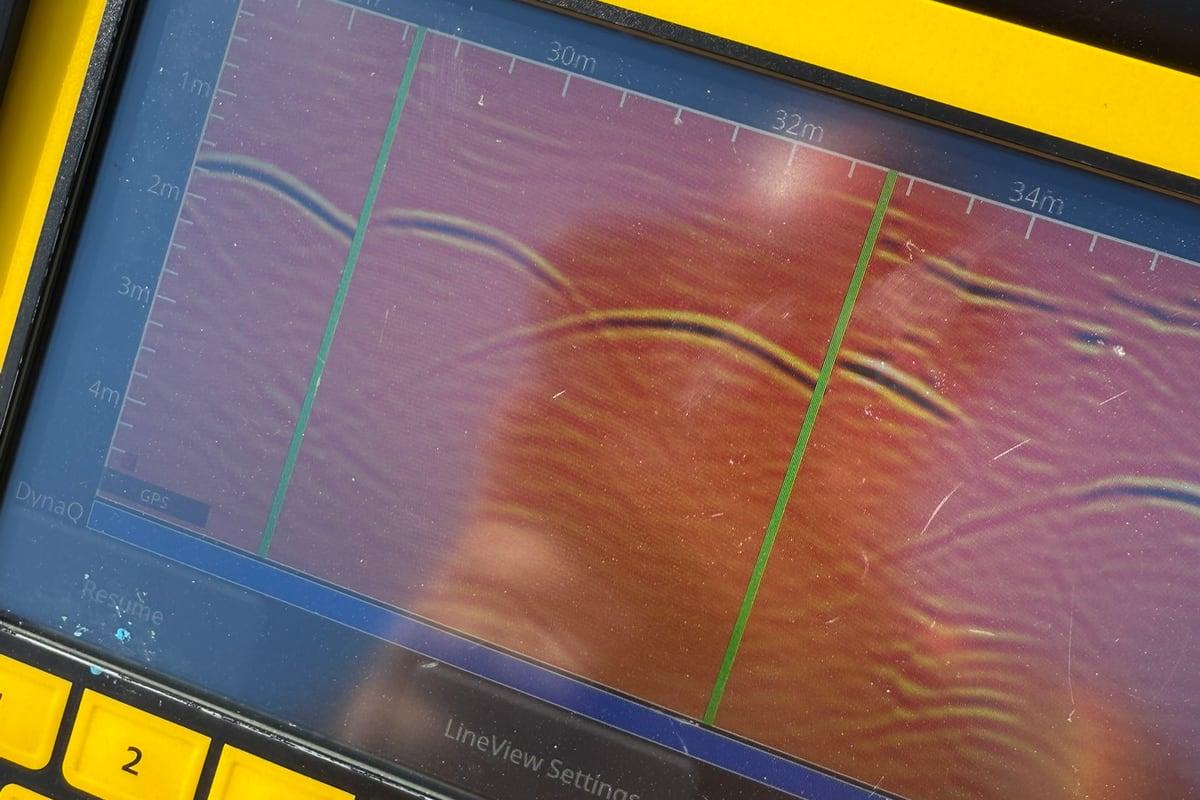
The picture above is a radar display on a job site. The scale across the top is distance travelled along the ground. The scale down the left side is depth. The bright arcs are what the operator is looking for.
A pipe does not appear as a circle. As the cart approaches, crosses and leaves a pipe, the distance to it shortens and then lengthens again, and that draws an arc. The top of the arc is where the target is, and its position on the depth scale is how deep it sits. A flat, continuous band is usually a layer, such as the bottom of the gravel base or the water table. A sharp, bright arc is typically a pipe, a cable in conduit or the edge of a tank.
One pass only shows that something is there. The operator crosses the same target several times from different directions and marks each hit. When the marks form a straight run, that is a line. When they form a rectangle, that is more likely a tank or a vault.
What GPR finds
- Plastic and other non-metallic pipe: water, storm, sanitary and irrigation lines
- Concrete and asbestos-cement mains
- Underground storage tanks and septic tanks
- Abandoned and unrecorded lines that carry no signal
- Buried structures: old foundations, slabs, vaults and duct banks
- Voids and disturbed ground, such as an old trench line
Where it struggles
Honest radar work starts with knowing when it will not perform.
- Wet clay and salty ground. Conductive soil absorbs the signal, and depth drops sharply. This is the most common limit on the coast and in parts of Alberta.
- Small targets at depth. A thin line a long way down may not return enough energy to see.
- Cluttered ground. Fill full of rubble and boulders returns reflections everywhere, and a pipe can hide among them.
- Rough or overgrown surfaces. The antenna needs to stay in contact with the ground. Tall grass, deep ruts and standing water get in the way.
- It does not identify. Radar shows that something is there and how deep. It does not say whether a pipe is gas or water. That comes from tracing, records and experience.
Dry sand and gravel image very well. Pavement over a compacted gravel base, which is what most parking lots and yards are built on, is usually good ground for radar.
Why radar and a locator are used together
An electromagnetic locator is faster and more definite on anything metallic. It follows a specific line from end to end and tells you which one it is. Radar covers what the locator cannot follow and catches lines nobody knew about. Used together, the two give a far more complete picture than either does alone, which is why we bring both.
Where we use it
- Parking lots and roads ahead of trenching, light standards and signs
- Recreation, school and municipal sites where records are incomplete
- Industrial yards and port lands with decades of buried services
- Residential properties for plastic water lines, drains and buried oil tanks
- Environmental and geotechnical work to clear borehole locations
What you get from a GPR scan
- Targets marked on the ground in paint and flags during the visit
- A written report of what was found and at what depth
- A clear note on ground conditions and anything that limited the scan
- On request, a survey of the targets for your drawings
Common questions
How deep can GPR see?
It depends on the ground and the antenna. In dry, sandy soil, well past typical utility depths. In wet clay, sometimes much less. We will tell you what to expect on your site before you commit.
Does it work through concrete and asphalt?
Yes. Pavement and slabs are routine. Heavily reinforced concrete can mask what is below it.
Does it work in winter?
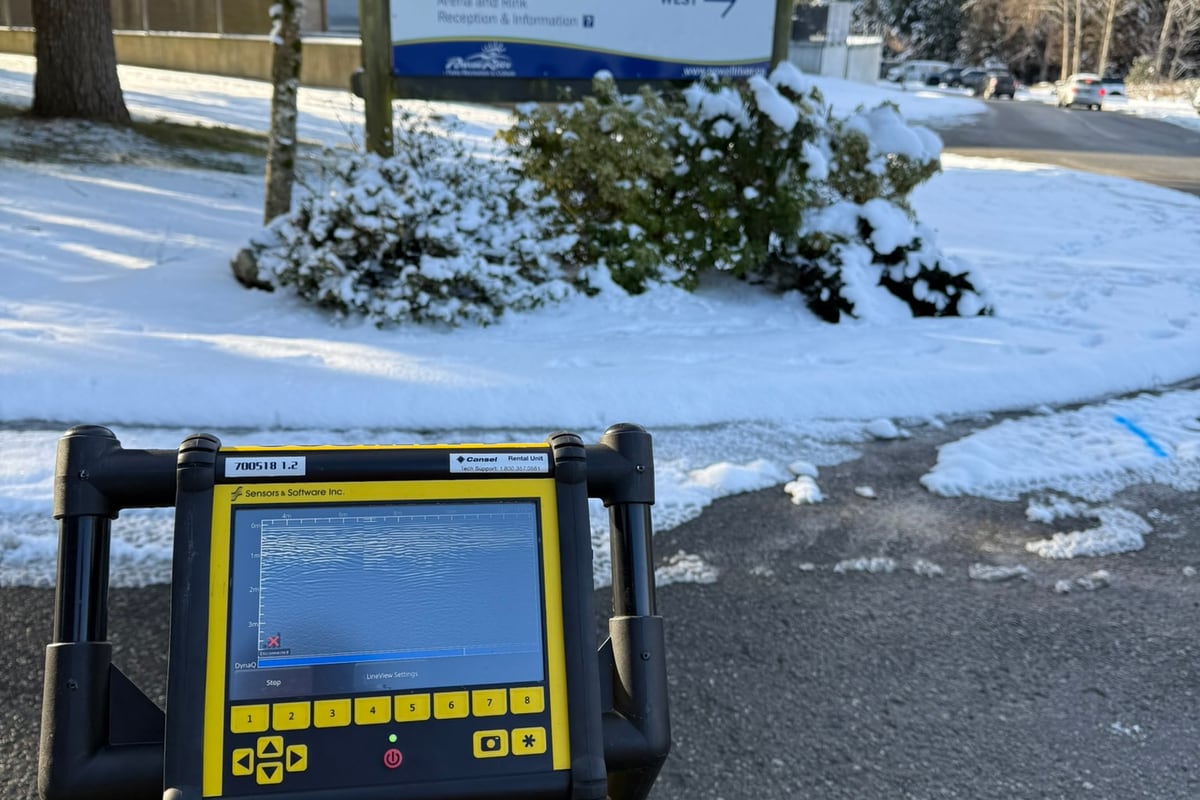
Yes. Frozen ground often images well. Deep snow and standing meltwater are the obstacles, not the cold.
Can it tell what a pipe is made of?
Not directly. The strength and shape of the reflection give clues, but the type of line is confirmed by tracing it and by what it connects to.
Book a GPR scan
We run GPR across British Columbia, Alberta and Yukon. Call 1-877-400-2293 any hour, or send the site details for a same-day reply. There is more on our ground penetrating radar page.