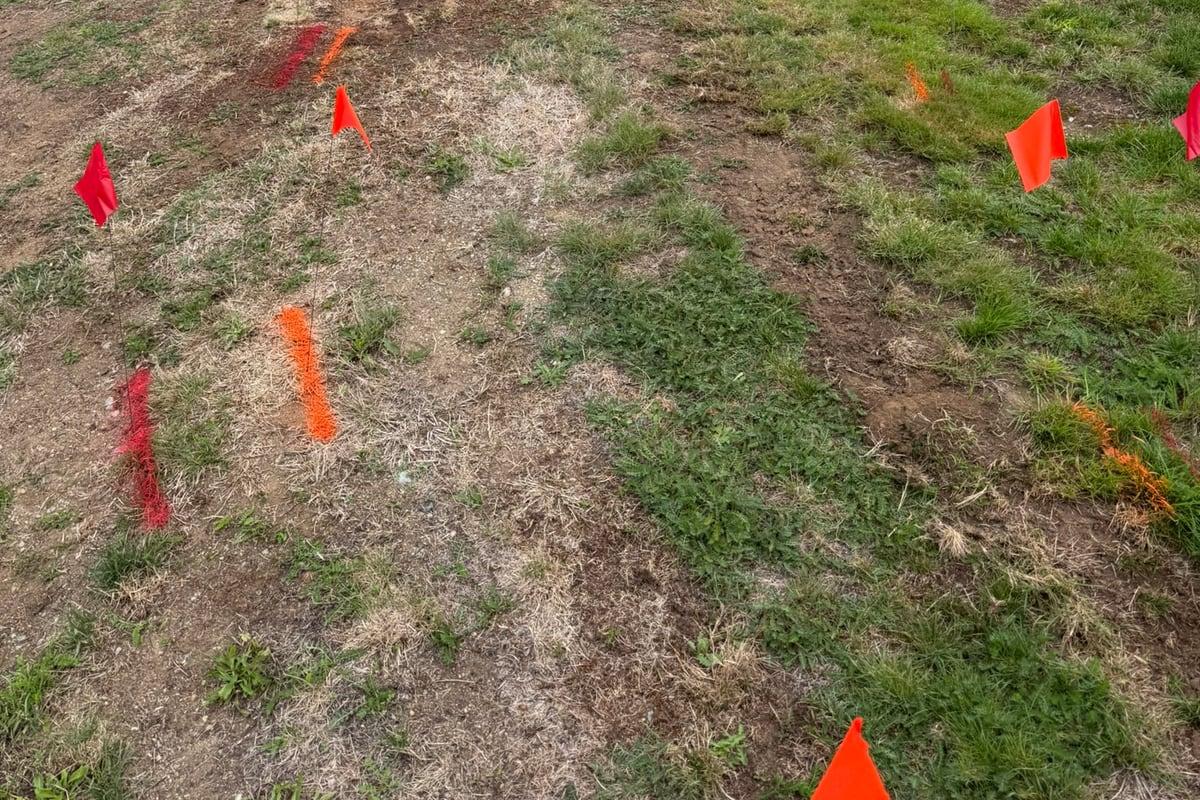
A private utility locate is a locate you book directly, for your site, on your schedule. A technician comes out, finds every buried line in the area you plan to dig, marks each one on the ground and leaves you with a written record. This article covers what that involves, what you get for it and how to make the visit go quickly.
When you need a locate
Any time something is going into the ground. The jobs we are called to most often:
- Fences, decks, screw piles and retaining walls
- Trenching for power, water or gas to a shop, suite or garage
- Additions, foundations and driveways
- Septic repairs, drainage and irrigation
- Boreholes, test pits and monitoring wells
- Commercial and industrial site work, from a single bollard to a full yard
It does not take a large excavation to hit something. Most strikes we hear about happened with a post-hole auger or a small trencher, a few feet from where the owner was sure the line ran.
What gets located
Everything in the dig area, not a selected list:
- Electrical: service cables, feeds to outbuildings, yard and parking lot lighting
- Gas: services and lines to generators, heaters, shops and barbecues
- Telephone, cable and fibre optic
- Water: services, lines between buildings, hydrants and irrigation
- Sanitary and storm: building sewers, septic lines and drains
- Tanks: buried oil and fuel tanks and their piping
What happens on site
- Walk the site. We look at where you are digging and at everything that hints at a buried line: risers, pedestals, valve boxes, cleanouts, light standards, patches in the asphalt.
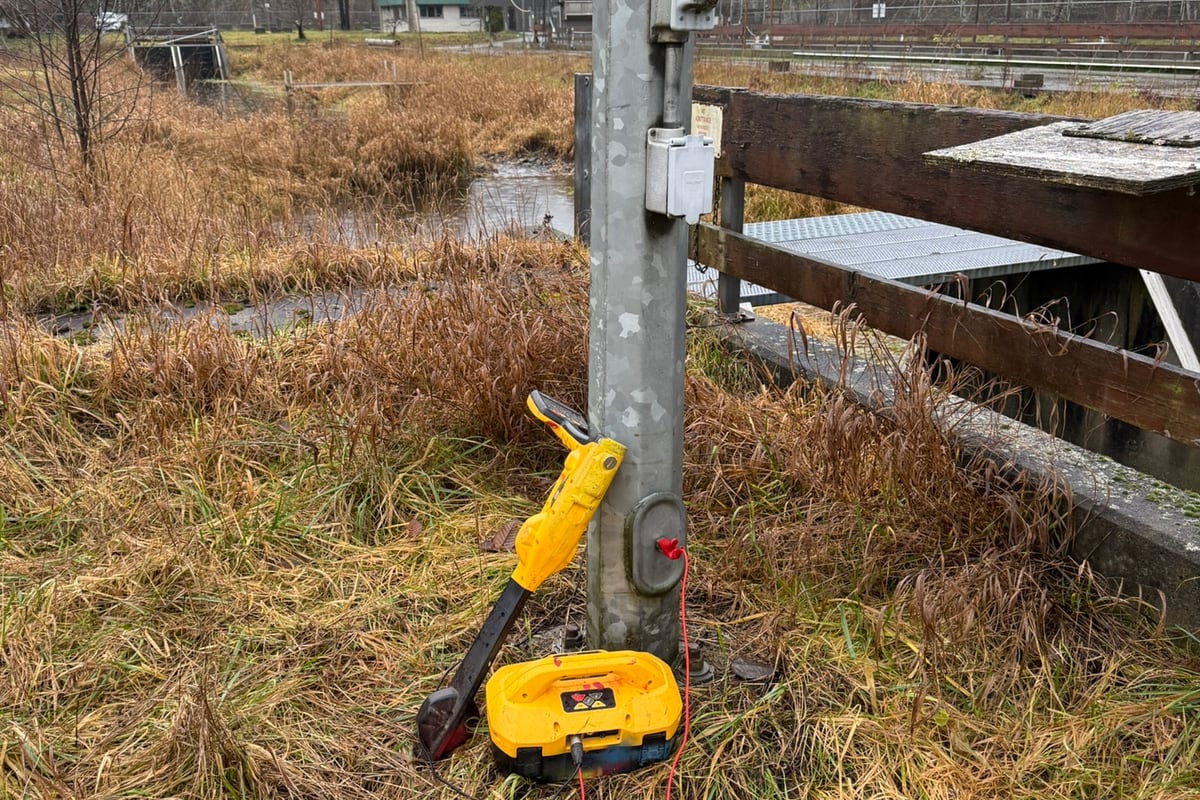
- Trace the conductive lines. A transmitter puts a signal on each metallic line or tracer wire, and a receiver follows it across the ground, giving position and depth.
- Scan for the rest. Plastic pipe and anything else with no signal to follow is searched for with ground penetrating radar.
- Sweep the dig area. A final pass looks for lines nobody knew to ask about.
- Mark it. Each line is painted and flagged in the standard colour for its type, so anyone on site can read it.
A typical residential locate is 20 to 30 minutes in the field. Commercial and industrial sites can take up to a full day.
What you get
- Paint and flags on the ground showing where each line runs
- A written report with a map of what was located
- A plain statement of anything that could not be confirmed, and why
- On request, a survey of the located lines for a site plan or as-built
The last point matters more than people expect. Paint fades in weeks. If the site will be worked on again, a surveyed record means the next project starts with a drawing instead of a guess.
What affects the price
Every site is quoted, because the work varies a great deal. The things that move the number:
- Size of the dig area. One fence line is not a whole lot.
- How congested the ground is. A newer house has a handful of lines. An older commercial yard can have decades of them.
- Access. Lines traced from inside a locked mechanical room take longer when nobody has the key.
- Whether radar is needed. Plastic pipe and tank searches add time.
- Whether you want it surveyed.
- Travel.
Send an address and a description of the work and you will have a price the same day.
How to get ready for the locator
These five things save the most time on site:
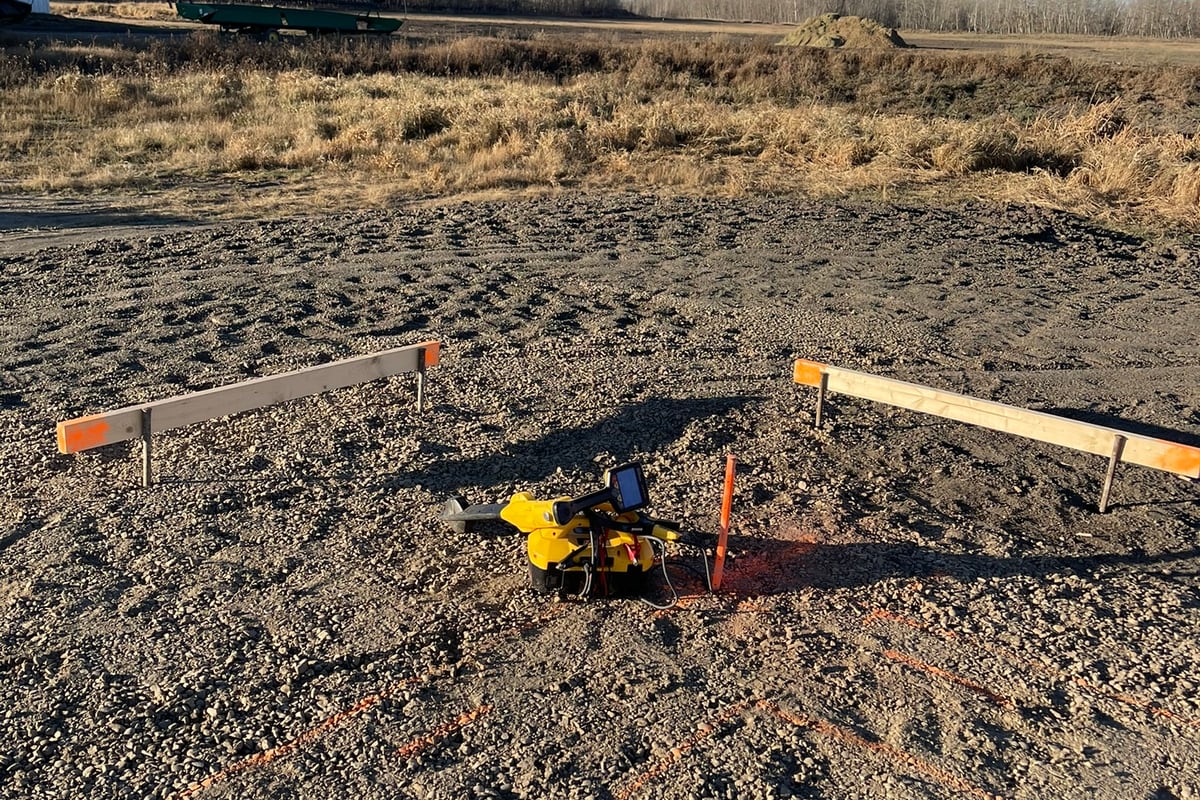
- Mark where you plan to dig. White paint, stakes or a sketch. The tighter the area, the faster and more thorough the locate.
- Arrange access. The electrical panel, mechanical room, crawl space and any outbuildings. Many lines are traced from where they enter a building.
- Clear what you can. Vehicles, stockpiles and equipment parked over the dig area hide the ground.
- Gather what you know. Old drawings, a septic permit, or the memory of where the last owner trenched to the shop. All of it helps.
- Tell us what is on the property. A pool, a generator, a well, a hot tub, yard lights, an irrigation system. Each one usually means a buried line.
How long the marks are good for
The lines do not move, but the marks do not last. Rain, traffic, mowing and snow clearing wear them off. If the dig is delayed by more than a couple of weeks, or the ground has been disturbed since the locate, have it re-marked before the machine starts. If the scope of the dig grows, have the new area located as well.
Five questions to ask any locating company
- Do you trace every line in the dig area, or only the ones I list?
- Do you carry ground penetrating radar for plastic pipe?
- Will I get a written report with a map?
- Will you tell me what you could not confirm?
- Can you survey the results if I need a drawing?
Book a private locate
We locate across Alberta, British Columbia and Yukon, and same or next day service is often available. Call 1-877-400-2293 any hour, or send the site details and we will reply the same day. More on the service is on our utility locating page.